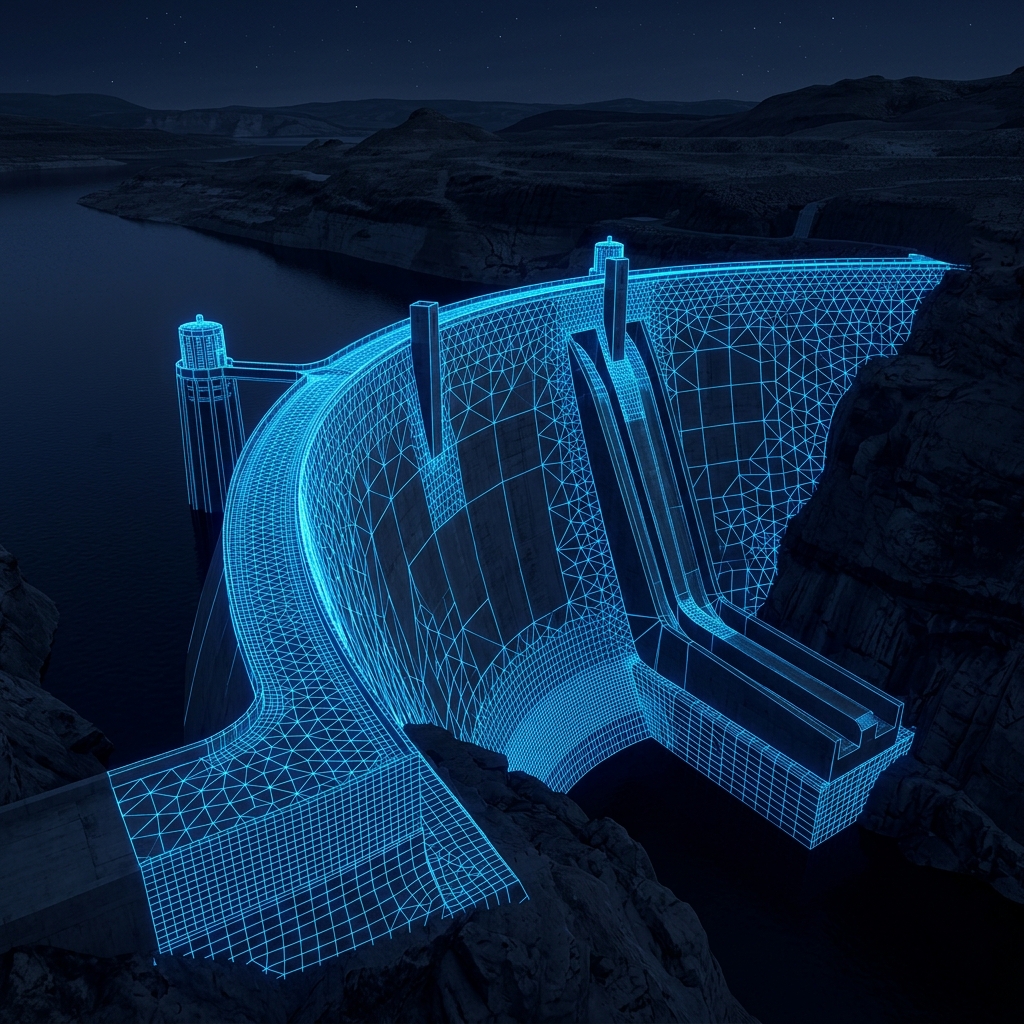
Applied Research with Real-World Impact

HATTAK's research programme is focused on applied research that directly advances engineering practice. Rather than pursuing purely academic outputs, the research programme is oriented toward developing methods, tools, and knowledge that can be immediately applied to solve real infrastructure engineering challenges.

This applied focus means that research at HATTAK is always connected to practical engineering questions — grounded in the problems faced by practitioners and decision-makers responsible for critical infrastructure assets.

HATTAK is open to research collaborations with universities, research institutes, and engineering organisations that share a commitment to advancing infrastructure safety and engineering knowledge.

Computational engineering and research

Research Focus Areas

HATTAK's research programme spans six interconnected areas, each contributing to the broader mission of advancing infrastructure engineering.

Computational Mechanics

Development and application of advanced finite element methods, including nonlinear analysis, damage mechanics, and fracture modelling for concrete and composite structures. Research into efficient numerical formulations and solution strategies for large-scale structural problems.

Finite Element Methods Damage Mechanics Fracture Modelling Nonlinear Analysis

Numerical Simulation

Advanced simulation methods for structural dynamics, fluid-structure interaction, and multi-physics problems relevant to dam engineering and critical infrastructure. Development of verified and validated simulation tools for engineering practice.

Structural Dynamics Fluid-Structure Interaction Multi-Physics Model Validation

Artificial Intelligence in Engineering

Application of machine learning and artificial intelligence to infrastructure engineering problems, including structural health monitoring, predictive maintenance, anomaly detection in sensor data, and surrogate modelling for computationally intensive simulations.

Machine Learning Neural Networks Surrogate Models Pattern Recognition

Infrastructure Resilience

Research into the quantification and improvement of infrastructure resilience against natural hazards, aging, and extreme events. Development of fragility functions, resilience metrics, and decision frameworks for infrastructure managers and regulators.

Fragility Functions Resilience Metrics Risk Quantification Decision Frameworks

Advanced Structural Assessment

Development of improved methods for assessing the structural condition and remaining life of ageing infrastructure. Research into crack propagation, concrete deterioration, and the long-term structural performance of dams and hydraulic structures.

Crack Propagation Remaining Life Concrete Deterioration Ageing Infrastructure

Data-Driven Engineering

Integration of monitoring data, sensor networks, and digital twins with engineering analysis to enable real-time structural performance assessment and condition-based management of infrastructure assets.

Digital Twins Sensor Integration Real-Time Assessment Structural Monitoring

Research Partnerships

HATTAK welcomes research collaboration with universities, industry, and government agencies on topics within our research programme.

University Partnerships

Collaborative research with Australian and international universities on computational mechanics, dam engineering, and infrastructure resilience topics.

Industry Research

Partnering with engineering firms, dam owners, and infrastructure operators to conduct applied research on specific engineering challenges.

Government & Regulatory

Supporting government agencies and dam safety regulators with research to underpin evidence-based policy and technical guidance development.

Discuss a Research Collaboration

Research Outputs

HATTAK's research activities contribute to peer-reviewed journal publications, conference proceedings, technical reports, and open-source software tools. Publications are available through relevant academic databases and engineering conference proceedings.

For enquiries about specific research topics, collaboration opportunities, or access to technical reports, please contact HATTAK directly.

Contact for Publications